PDF Download The Only Woman in the Room: Why Science Is Still a Boys' Club, by Eileen Pollack
We recognize that everyone will require various book to check out. The needs will depend upon how they deal with. When they require the resources from the other nation, we will certainly not let them feel so tough. We provide guides from abroad quickly based upon the soft data supplied in web link lists. All books that we offer remain in simple ways to attach and get, as the The Only Woman In The Room: Why Science Is Still A Boys' Club, By Eileen Pollack in soft documents in this internet site.
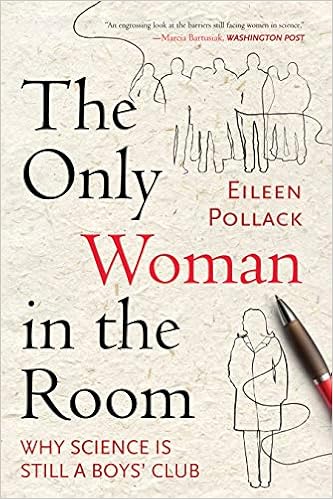
The Only Woman in the Room: Why Science Is Still a Boys' Club, by Eileen Pollack

PDF Download The Only Woman in the Room: Why Science Is Still a Boys' Club, by Eileen Pollack
Don't alter your mind when you are starting to prepare to have analysis behavior. This routine is an excellent and also wonderful practice. You need to enliven it with the best publications. Many books show and offer there incredible web content based upon each genres and also subjects. Even each book has various taste of creating; they will offer far better condition when read effectively. This is what makes us proudly existing The Only Woman In The Room: Why Science Is Still A Boys' Club, By Eileen Pollack as one of guides to review now.
Total as well as valid become the feature of this book. When you require something reliable, this book is primary. Many people also get The Only Woman In The Room: Why Science Is Still A Boys' Club, By Eileen Pollack as reference when they are having due date. Deadline will certainly make someone really feel so misery as well as anxious of their duties and also works. But, by reading this publication also little for little, they will be more eased.
Yeas, this readies news to know that The Only Woman In The Room: Why Science Is Still A Boys' Club, By Eileen Pollack has actually exposed again. Many people have actually been awaiting this writer functions. Even this is not in your preferred publication, it will not be that fault to attempt reviewing it. Why should be doubt to get the brand-new publication suggestion? We constantly refer a publication that can be needed for all people. So by doing this, when you have to know more regarding the The Only Woman In The Room: Why Science Is Still A Boys' Club, By Eileen Pollack that has been provided in this internet site, you have to sign up with to the web link that most of us advise.
This The Only Woman In The Room: Why Science Is Still A Boys' Club, By Eileen Pollack becomes a complement in your preparation for much better life. It is to should get guide to obtain the very best vendor or best author. Every book has particular making you feel deeply regarding the message and perception. So, when you locate this book in this website, it's better to get this publication soon. You could see how an easy publication will provide effective impact for you.
Review
“Hard-hitting, difficult to read, and impossible to put down.” —Kirkus Reviews“Honest, readable, and brave.”—Library Journal“Offering an engrossing look at the barriers still facing women in science...Pollack draws attention to this important and vexing problem with a personal narrative, beautifully written and full of important insights on the changes needed to make those barriers crumble...Any young woman or man on the way to college to major in science will find great lessons in this book.”—Washington Post“Her memoir rings authentic, its lessons essential. A bitter pill to swallow but a vital addition to the important and frustratingly ongoing discussion about gender equity.”—Poornima Apte, Booklist“The Only Woman in the Room is absolutely brilliant—even a sleeping pill and head cold couldn’t stop me from reading it through the night. Pollack’s story reveals so much—I want to give it to my children, my husband, my older sister (a biologist), and every physicist I know, perhaps with key passages underlined. And especially, young women in science: read this book!”—Meg Urry, President of the American Astronomical Society, and former chair of the Department of Physics at Yale University“With excruciating candor Eileen Pollack details how society's relentless message that girls lack the intrinsic aptitude for high-level math and physics leaves young women without the confidence to stay the course in the brutally competitive environment of high-powered science. This is a riveting, insider's-account of how unconscious biases make a mockery of meritocracy, why women's equality remains elusive, and why Larry Summers was so wrong.”—Nancy Hopkins, Amgen Inc. Professor of Biology (emerita), Massachusetts Institute of Technology“In Eileen Pollack’s vivid description of the issues facing women in science, I immediately saw the truth of what I have lived. Pollack is convincing in showing how the obstacles for women in the U.S. are erected by our culture. In the 1960’s my mother had to put up with exclusionary rules that kept her out of a career in science. You would think things might have gotten better for my generation, and for the current generation. But they have not. Eileen Pollack courageously and honestly examines her own life and shows us why.”—Carol Greider, winner of the Nobel Prize in Physiology or Medicine and Daniel Nathans Professor and Chair of the Department of Molecular Biology and Genetics at Johns Hopkins University“My remarks on women and science generated much heat—if they helped stimulate Eileen Pollack’s introspections and reflections, they shed light as well. I certainly understand many aspects of the issue better for reading Pollack’s work. We all want great opportunities for all, and as she demonstrates, the world has a long way to go.”—Lawrence H. Summers, Charles W. Eliot University Professor and President Emeritus, Harvard University, and former Secretary of the TreasuryFrom the Hardcover edition.
Read more
About the Author
Eileen Pollack is the author of the novels Breaking and Entering (a New York Times Editor’s Choice selection) and Paradise, New York, as well as two collections of short fiction, an award-winning book of nonfiction, and two creative-nonfiction textbooks. Her work has appeared in Best American Essays and Best American Short Stories. She is a professor on the faculty of the Helen Zell MFA Program in Creative Writing at the University of Michigan. She divides her time between Manhattan and Ann Arbor, Michigan.
Read more
See all Editorial Reviews
Product details
Paperback: 288 pages
Publisher: Beacon Press; Reprint edition (September 6, 2016)
Language: English
ISBN-10: 0807083445
ISBN-13: 978-0807083444
Product Dimensions:
5.9 x 0.8 x 9 inches
Shipping Weight: 1 pounds (View shipping rates and policies)
Average Customer Review:
3.7 out of 5 stars
40 customer reviews
Amazon Best Sellers Rank:
#500,509 in Books (See Top 100 in Books)
I care about the under-representation of women in STEM fields, and it pains me to give a book on this topic a low rating. Pollack expertly describes many of the subtle obstacles and pervasive barriers that deter women from STEM, but... These accounts were presented in the context of her own experiences, and I found many of her statements (and her own motivations) counterproductive to the stated mission of this book. Many things she said were outright insulting.The first sign that something was wrong appeared in the book's preface:"Even women who grow up to be feisty, successful feminists spend much of their adolescence obsessing about their appearance, romance, sex, and their popularity with female friends. ...girls may dumb them themselves down, hide or repress their interest in classes or activities their peers deem nerdy. They may develop crushes on their teachers and other older men, who don't see them as threatening and are all too happy to reciprocate their affection. A boy might pursue a subject because he respects the man who teaches it, but unless he is gay, he won't fall in love with that teacher, as so many young women do." (p. xx)My reaction: WHAT?!Her words reminded me of biochemist Tim Hunt's offensive statement that female scientists shouldn't work with male scientists because "You fall in love with them, they fall in love with you and when you criticize them, they cry." Pollack's statement implies not only that sexual attraction will create problems for female students of science, but that such problems are common. That will only deter male scientists from mentoring female students!It only got worse as Pollack revealed again and again that romantic attraction motivated much of her scientific pursuits. While I appreciate her honesty, in this context honesty is damaging, especially because she portrayed her own motivates as commonplace instead of unique to her personality. Her story creates the impression that many women pursue science for male attention, and that romantic tension is a regular occurrence in interactions between male professors and female students. That is not only inaccurate (from my experience, anyway), it is incredibly counterproductive to the mission of getting more women in STEM fields.This was such a theme in Pollack's story that I started a document to record unsettling and/or offensive quotes from the book. I nearly stopped reading altogether when I reached page 35, when Pollack reveals she had a romance with her high school debate teacher. I was disgusted. Three pages later, she describes how she visited Yale after receiving an offer of admission, and she decided to go there because she was attracted to a male physics professor after watching him lecture.The last few chapters of the book depict solidarity among women who want to pursue STEM until they're discouraged or turned away, but this comes too late. Earlier in the book Pollack made it clear she disliked and felt competition with other women as a student. She had awe and respect only for men and wanted nothing to do with other women:"But the women's movement seemed to mean women ended up spending more time with other women, and something called 'consciousness-raising groups,' and the last thing I wanted was to spend more time with women. If women ran the world, society would be less competitive. But I loved competing. How else could I prove to the brilliant, powerful men who rules the world but I was as smart and strong as they were?" (p. 21)This passage was particularly offensive:When describing the only other female physics major: "And as much as I enjoyed the sight of her shining, smiling face, I can't say we were friends. If a person's self-worth derives from being the only woman in the field, how much affection can she feel toward another woman who might challenge that claim to fame? Erika's decision to pursue a bachelor's of arts degree rather than the more demanding bachelor of science struck me as cheating. It was as if we had signed up to be marines, and here we were at boot camp, each wearing the same uniform, but Erika got to stay in the barracks and buff her nails while the rest of us jogged fifty miles in the rain." (p. 47)Holy s***! Majoring in physics isn't easy, even if you're pursuing a B.A. instead of a B.S. The analogy she used--Erika buffing her nails, Pollack jogging fifty miles in the rain--was so insulting. Clearly Pollock thought very well of herself. Far from being a proponent of female representation in STEM, she wanted other women to abandon the field. She wanted to be the only woman in physics because it made her feel smart and special.At this point, I was disgusted by Pollack, and I often paused my reading to vent to my husband whenever I encountered another offensive passage. But I kept reading, and it became more and more obvious that Pollack's pursuit of physics was at least partly motivated by a desire to attain men."Could anything be more exciting than carrying a pristine notebook embossed with 'Lux et veritas' to a lecture hall where I would finally begins the life I had been waiting eighteen years to start? My status as one of only two women in the auditorium struck me as less frightening than erotic; it was like going to a movie with 118 dates. I was even more excited when the professor turned out to be the same dark, bearded young man whose class I had visited the spring before." (p. 53)"My new powers of understanding might have flowed from nothing more than Professor Zeller's voice murmuring seductively in my head: 'You can do it. Stick it out.'" (p. 58)"My attraction to my professors kept me working to please them long after I might otherwise have given up." (p. 128)Despite these criticisms, there were many things I did like about this book. Pollack describes the subtle ways women are discouraged from pursuing STEM, and the firsthand accounts of other women's struggles were great. I heartily agree with the message of this book, and more people need to know why we have too few female scientists. But at the same time, Pollack's own story could be counterproductive. Normally I appreciate honesty, but I wish she hadn't disclosed these things about herself. If readers assume her romantic motives are present in other women, it will exacerbate the problem.In addition to her apparent disdain for other women (she only respected men's opinions), Pollack also derogates scientific disciplines that aren't physics. This passage angered me:"As to why there are more female chemists then physicists, my hunch is most chemists aren't looking to explain the universe, only to produce a fabric that doesn't wrinkle or absorb odors, a vanilla pudding that tastes more vanilla-y, a bacterium that eats up oil." (p. 202)She just insulted the ENTIRE FIELD OF CHEMISTRY! That is so offensive! As if physics is the only real science, the only one that truly requires intelligence and passion.My last complaint about this book is how woefully it covers scientific research on gender disparity in STEM fields. (Ironic, isn't it?) There are hundreds of psychology experiments on this very issue. She briefly mentioned one study on stereotype threat (without describing the phenomenon of stereotype threat itself), but she completely ignored a vast literature whose inclusion would only bolster her arguments. For example, social psychologist Amanda Diekman has conducted terrific research on why some women avoid STEM and how to change this. (See: htt[...]) But you know what? I bet Pollack doesn't even consider psychology a science.Again, I'm totally on board with the mission of this book, but I wish it had a different flag-bearer.
I got this book after seeing Ms. Pollack's interview on book TV. I thought there would be more of a historical reference on why women are rarely seen, in science disciplines... but her personal story was interesting. I liked how she correlated her experiences, with how she now encourages others. I'd recommend it for a rainy afternoon.
I loved this book and read it in two sittings. I found it compelling, but flawed. My reaction is mixed because while I could relate to and appreciate her story, the book was not what I expected. The last third of the book goes the direction the sales blurbs suggest, an informal study of why women leave STEM. Instead, the book, for the first two-thirds, is more of an explorative memoir analyzing why the author herself did not survive STEM. Then she seeks to find a confirmation of her one dimensional conclusions through other women's experiences or opinions. This by no means invalidates her experiences, and she's not wrong, but hers is more of a consensus of opinions than a hard hitting study and analysis. There are a few things she forgets to mention, such as the reason she was one of the first two women to get a physics degree from Yale was because Yale had only just started to admit women. Other women studied the hard sciences at many national and regional universities for many years before she showed up at Yale. However, I am certain every one of them faced very similar experiences in their fights to finish. I know this is so because I was an Applied Mathematics and Engineering major in the early 70s, pre-dating her, and there was not one day I felt accepted or welcome or comfortable. Everything she says has a ring of truth. But for those of us who persevered and then continued out into the world to make our marks, the adverse environment of college was just the beginning. So, for me, her memoir, full of self analysis, feels like regret and seeking validation for her choice to leave it behind. But in the end, this book is very much needed, and one I will recommend and buy for friends and family to read. First of all, so little has changed in forty years. Second, no nation can afford to close the door to half of its most talented people and continue to progress. Women now make up half of all medical school students and more than half of all law school students, but in STEM fields the numbers hover in the low double digits. For example, less than fifteen percent of engineers are female, up from the one percent when I began, but nowhere near what it could be. Why is that? If we can be a doctor who delivers babies, or a surgeon who operates on brains, or a lawyer who takes on the big pharmaceuticals, we can be an engineer who works on engines or roads or power plants or missiles, or a scientist who discovers new galaxies or finds a new subatomic particle or cures a disease. Eileen Pollack may have cracked that door open a sliver wider by asking the right questions, but what we really need are better answers.
I am a pharmacologist who is just a few years older than the author. I couldn't put the book down. I identified with so many of her experiences and outcomes. She helped me put so many of my own life experiences in perspective. Now my daughter is beginning her career in science, and I left the book with her. I hope it will help her feel that she is not alone, when she is the only woman in the room. Yes, maybe attitudes have changed in academia, but maybe they are just more subtle.
Eileen Pollack has written a courageous and highly personal agonizing account of her undergraduate days as a physics major at Yale. Her experiences with indifferent to sexist professors bites. My own student days at UPenn, years earlier, were the same: discouragement and outright misogyny. Few of us escaped without scars. No wonder we went west. Pollock's memoir is a challenge to change: support young women.
I read this in one sitting. She does a great job of demonstrating how unconscious bias affected her life and how it is still operational. I laughed out loud in many places! I am older than she is, and am a retired physician, and although my experiences were not as awful as many of hers, I could empathize.
This presents the facts and how changes MAY happen. It reminds me of the book Smart Girls Marry Money by Daniela Drake, MD. The fact is the percentage of women in business and in science means we have to follow the money. Facts don't lie. Teach your daughters science from an early age.
The Only Woman in the Room: Why Science Is Still a Boys' Club, by Eileen Pollack PDF
The Only Woman in the Room: Why Science Is Still a Boys' Club, by Eileen Pollack EPub
The Only Woman in the Room: Why Science Is Still a Boys' Club, by Eileen Pollack Doc
The Only Woman in the Room: Why Science Is Still a Boys' Club, by Eileen Pollack iBooks
The Only Woman in the Room: Why Science Is Still a Boys' Club, by Eileen Pollack rtf
The Only Woman in the Room: Why Science Is Still a Boys' Club, by Eileen Pollack Mobipocket
The Only Woman in the Room: Why Science Is Still a Boys' Club, by Eileen Pollack Kindle
0 komentar:
Posting Komentar